







In the world of communication and promotion, visual impact alone is no longer enough. Today, the most successful campaigns are those that also “speak” to the subtler senses — and among these, the sense of smell is without doubt one of the most powerful. This is where scented prints come into play: cards, postcards, inserts, and labels that release fragrance when the scented area is rubbed, turning a simple piece of paper into a multisensory experience.
What Are Scented Prints and How Do They Work?
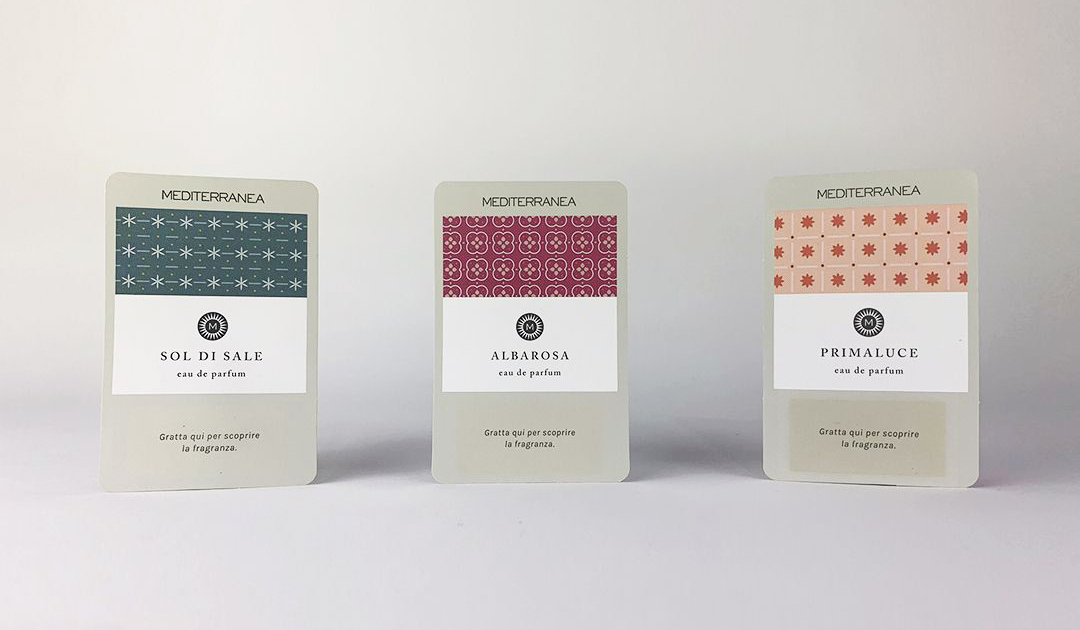
Scented prints are paper products (postcards, flyers, magazine inserts, labels, posters, etc.) into which fragrance microcapsules are integrated — thanks to microencapsulation technology — that release the scent only when the scented area is rubbed. This allows the recipient to “test” the fragrance of your product even before making a purchase.
Why They Work: The Advantages of Adding Fragrance to Paper
- Emotional Engagement
The sense of smell is closely linked to memory and emotions. A carefully chosen fragrance can evoke memories, pleasant sensations, and create a stronger bond with the brand. - Market Differentiation
In a sea of standard flyers, a scented item immediately stands out: it captures attention, arouses curiosity, and conveys an innovative and sophisticated image. - “Try Before You Buy”
It allows potential customers to experience your scent or fragrance even before trying the actual product. This can lower purchase barriers, especially in cosmetics, perfumery, cleaning products, and home fragrance sectors. - High Customization and Flexibility
Scented prints can be produced in various shapes, sizes, and fragrances, and integrated into complex or highly targeted promotional campaigns (e.g., a scented insert in a magazine, mailing campaign, or aromatic packaging).
When to Use Them and How to Integrate Them into Marketing Strategies
- Product Launch or Fragrance Collection – Sending a scented insert together with a catalog or brochure can build anticipation and desire.
- Targeted Print Campaigns – Adding a “rub & smell” section inside a magazine or direct mailing piece can stimulate reader engagement.
- Events, Trade Shows, and Sampling – Handing out scented postcards alongside product samples is an elegant way to offer an olfactory preview.
- Promotions with Coupons or Discounts – Incorporating a scented area into coupons can increase interaction.
- Packaging Branding – Adding scented inserts inside boxes or packages can enrich the unboxing experience.
In Conclusion
In a landscape oversaturated with visual stimuli, sensory marketing stands out as a distinctive strategy. Scented prints are a powerful tool to emotionally engage your audience, boost brand memorability, and support the path to purchase.


